

Clinical Skincare vs Cosmetic Skincare
Updated: May 13
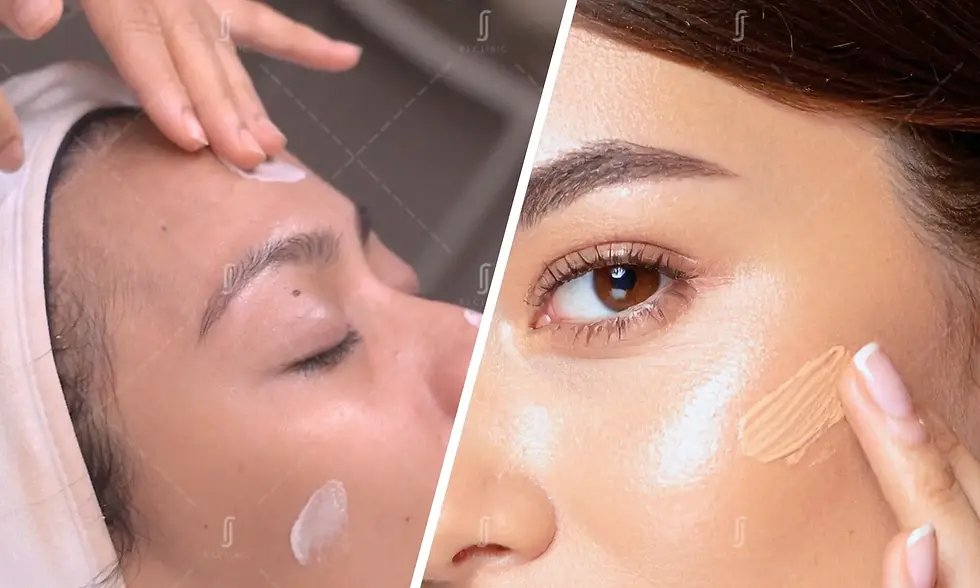
A cleanser can feel luxurious, a serum can promise glow, and a cream can look impressive on the shelf - but that does not mean they all work in the same way. When people compare clinical skincare vs cosmetic skincare, what they are really asking is simpler: which products are designed mainly to beautify the skin, and which are formulated to actively improve a skin concern with more targeted intent?
That distinction matters if you are dealing with acne, oiliness, dehydration, uneven tone, or early signs of aging. It also matters if you are tired of spending on products that feel good for two weeks but never quite move the needle.
What clinical skincare vs cosmetic skincare really means
Clinical skincare is typically built around function first. These formulas are usually developed with specific skin concerns in mind, using active ingredients at purposeful levels and in combinations chosen for visible improvement. The goal is not just to make skin feel softer for the moment, but to support clearer, calmer, more balanced skin over time.
Cosmetic skincare is usually more focused on surface-level enhancement and sensory experience. That does not make it bad. Many cosmetic products can hydrate, smooth, brighten, and help skin look fresher. But in many cases, the emphasis is on beauty, texture, fragrance, packaging, and immediate cosmetic effect rather than a more treatment-led approach.
The line is not always rigid. Some cosmetic brands use strong actives. Some clinical brands also care about elegant textures and daily usability. The difference is often found in the overall philosophy of the product: is it mainly designed to market a beauty experience, or is it built to address a concern with more clinical precision?
Ingredient strategy is where the difference shows
One of the clearest ways to understand clinical skincare vs cosmetic skincare is to look at formulation strategy.
Clinical skincare tends to center active ingredients with known roles, such as salicylic acid for congestion, niacinamide for oil balance and barrier support, retinoid-related ingredients for skin renewal, or humectants and ceramides for hydration and resilience. The formula is usually structured so those ingredients can do a specific job, not simply appear on a label.
Cosmetic skincare may also include trendy actives, but sometimes in lower concentrations, less optimized combinations, or formulas where performance takes a back seat to marketing appeal. A product can mention vitamin C, peptides, or acids and still deliver only modest impact if the formula is not designed well.
This is why ingredient lists alone do not tell the full story. Two serums can contain niacinamide, but one may be designed for meaningful oil control and barrier support while the other uses it more as a supporting feature in a glow-focused formula.
Results tend to look different over time
Cosmetic skincare often gives quicker sensory rewards. Skin may feel smoother, look dewier, or seem more polished after one or two uses. Those effects can be satisfying, and for some people, that is enough. If your skin is already balanced and you mainly want maintenance and a pleasant routine, cosmetic skincare may fit well.
Clinical skincare usually asks for more patience, but it is often the better choice when there is a real concern to address. Congestion, frequent breakouts, post-acne marks, persistent oiliness, rough texture, or visible dehydration are rarely solved by surface-level products alone. A more clinical formula is generally built to create cumulative improvement through repeated use.
That said, stronger does not always mean better. If a product is too aggressive for your skin, you may end up with irritation, dryness, and inconsistency. The best clinical approach is not the harshest one. It is the one your skin can tolerate well enough to use consistently.
Who should choose clinical skincare
If your skin has a pattern you want to change, clinical skincare is usually the more sensible place to start. This includes adults managing acne beyond their teens, professionals dealing with stress-related breakouts, people noticing fine lines and dullness, or anyone who feels their current routine is all maintenance and no progress.
Clinical skincare is also a strong fit for people who want a streamlined routine with a purpose behind each step. Instead of layering five products that overlap, a more targeted system can often do more with less. That matters when your mornings are rushed and your evening routine needs to feel realistic.
Brands with a clinically guided approach, including ranges like RJ Clinicals, tend to appeal to this kind of customer because the positioning is clearer. The focus is not on selling fantasy. It is on helping people choose products that make sense for the skin issue in front of them.
When cosmetic skincare still makes sense
Cosmetic skincare is not the lesser category. It simply serves a different role.
If your skin is generally stable and you enjoy products that add comfort, glow, softness, or a polished finish, cosmetic skincare can absolutely be part of a good routine. It can also work well for beginners who are not ready for more active treatment products, or for people with very sensitive skin who need a simpler, lower-intensity approach.
There is also a place for cosmetic products alongside clinical ones. A treatment serum may handle breakouts or uneven tone, while a cosmetic moisturizer or hydrating mist makes the routine more enjoyable and supports daily comfort. It does not have to be one camp or the other.
Why packaging and marketing can be misleading
One reason this topic gets confusing is that cosmetic skincare often borrows the language of clinical care. Terms like dermatologist-inspired, professional-grade, or advanced formula can appear on packaging without giving you much real information.
A polished brand image is not proof of treatment value. Neither is a long ingredient story. What matters more is whether the product has a clear purpose, whether the actives make sense for that purpose, and whether the formula is likely to be usable enough for consistent application.
On the other side, clinical skincare does not need to look sterile or overly medical to be effective. Modern consumers want efficacy, but they also want textures they will actually use. The best clinical products respect both.
How to tell which category a product leans toward
A practical way to assess a product is to ask what claim sits at the center of it.
If the message is mostly about radiance, softness, glow, indulgence, or beauty enhancement, it likely leans cosmetic. If the message is focused on clarifying acne-prone skin, improving texture, supporting the barrier, reducing excess oil, or targeting visible aging concerns, it likely leans clinical.
Then consider the formula itself. Does it highlight a small number of relevant actives with a clear reason for use? Does the routine placement make sense? Is the product described in terms of skin function and outcomes rather than just appearance? Those are stronger signs of a clinically positioned product.
Price is not a reliable shortcut. Expensive skincare can still be mostly cosmetic. More affordable products can still be well-formulated and treatment-oriented.
The trade-off most people should understand
Clinical skincare often comes with a learning curve. You may need to introduce actives gradually, avoid combining too many treatment products at once, and give results time to build. If you expect instant transformation, you may underrate a product that is actually doing valuable work.
Cosmetic skincare is often easier to love immediately. It may smell nicer, feel silkier, and create a satisfying finish from day one. The trade-off is that it may not do enough for stubborn concerns.
For many people, the smartest routine is a balanced one: clinical products doing the heavy lifting, cosmetic products supporting comfort and consistency. That approach feels less extreme and often works better in real life.
A smarter way to build your routine
If you are deciding between clinical skincare vs cosmetic skincare, start with your actual goal, not the branding. If you want to correct or improve something specific, choose products with a more clinical purpose. If you mainly want maintenance, comfort, and a nicer skin finish, cosmetic products may be enough.
Keep the routine edited. A targeted cleanser, one treatment step, a moisturizer, and daily sunscreen can outperform a crowded shelf. Better skin usually comes from better product selection, not more products.
The useful question is not which category sounds more impressive. It is which one gives your skin a clearer path forward - and fits your life well enough that you will keep using it.


Comments