

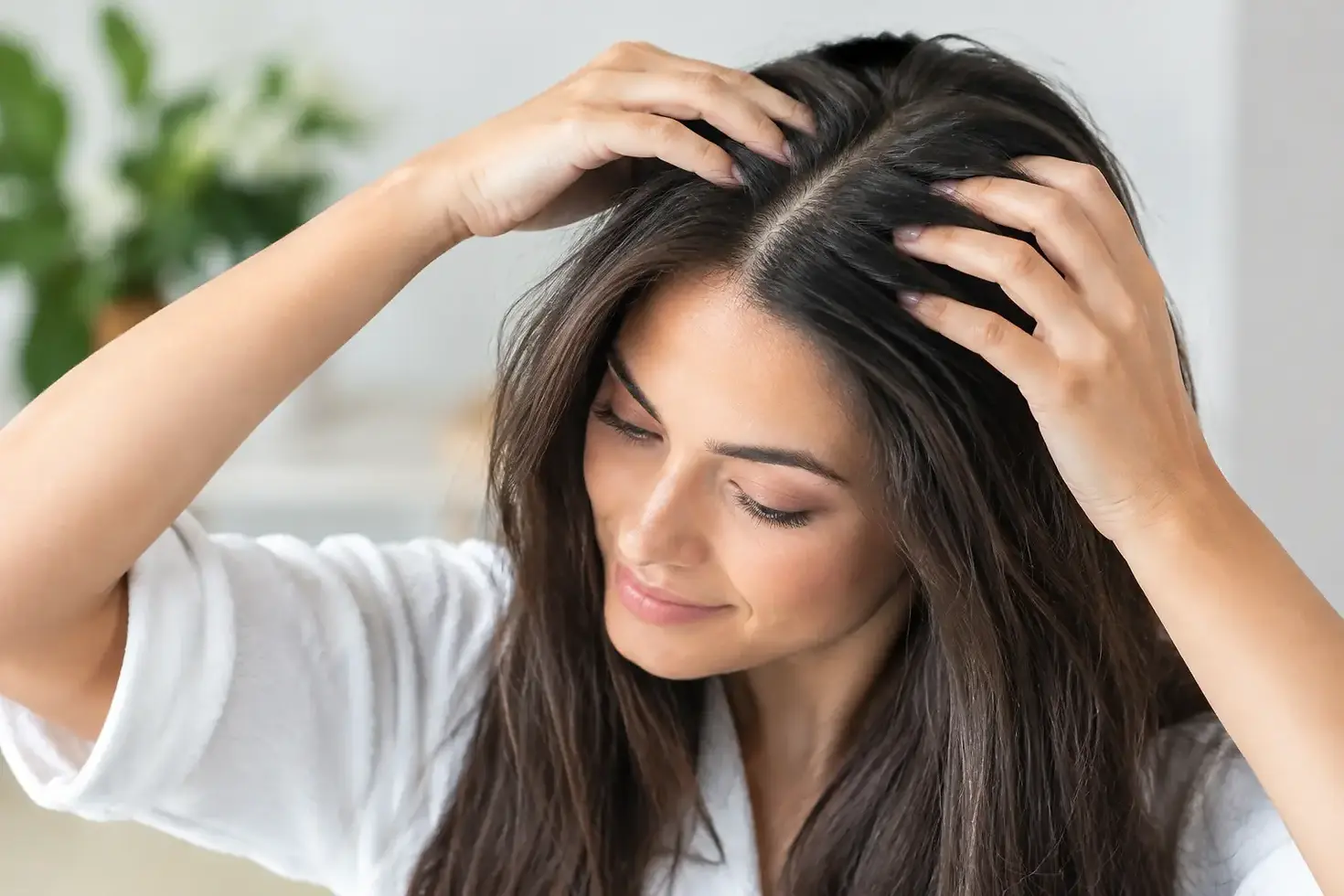
Scalp Health: The Foundation of Better Hair
A great hair routine can still fall short when the skin beneath it is irritated, congested, or out of balance. Scalp health influences how comfortable your hair feels day to day, how easily it becomes oily or flaky, and how well your hair looks at the root. It is not about chasing a perfect scalp. It is about recognizing what your scalp needs and responding with a routine that is consistent, simple, and appropriate for you.
For busy adults, scalp concerns often show up gradually: more flakes on dark clothing, roots that feel greasy by midday, lingering itchiness, or hair that seems flatter and more fragile than it once did. These changes can have several causes, and the right response depends on the pattern rather than one symptom alone.
What Scalp Health Really Means
Your scalp is skin, but it has a more demanding job than the skin on most other areas of the body. It manages oil production, supports hair follicles, sheds skin cells, and is exposed to sweat, styling products, heat, environmental residue, and frequent friction from brushing or headwear.
A healthy scalp generally feels comfortable. It does not have persistent burning, intense itchiness, visible redness, or heavy scaling. Some oil is normal and useful because it helps protect the scalp and hair fiber. The goal is not to strip every trace of oil away. Over-cleansing can leave the scalp feeling tight and can encourage a cycle of irritation or compensatory oiliness.
Hair itself is not living beyond the follicle, so it cannot repair or regulate the way skin can. That is why the condition of the scalp matters so much. A balanced scalp creates a better environment for hair to grow through its natural cycle, while a disrupted one can make hair care feel harder than it needs to be.
The Signs Your Scalp Routine Needs Attention
Flakes are the most recognized sign, but they are not all the same. Fine, dry-looking flakes may appear when the scalp is dehydrated, over-washed, or exposed to harsh cleansing. Greasy, yellowish flakes can point to excess oil and buildup. If flakes are accompanied by redness, discomfort, or thick patches, it is worth seeking guidance from a dermatologist or qualified healthcare professional rather than repeatedly switching shampoos.
Oiliness can also be misunderstood. Some people naturally produce more sebum, particularly in humid weather, after workouts, or when using heavy conditioners and styling products close to the roots. Skipping shampoo for too long may make the scalp feel congested, but washing too aggressively can be equally unhelpful. The best schedule is the one that keeps your scalp comfortable without leaving it stripped.
Hair shedding deserves a measured approach. It is normal to shed some hairs daily, and temporary shedding can follow stress, illness, nutritional changes, hormonal shifts, or major lifestyle changes. However, a widening part, increased scalp visibility, receding areas, or ongoing diffuse thinning calls for earlier attention. Hair loss has different causes, and targeted treatments are most useful when chosen for the right reason.
Build a Scalp Health Routine That Fits Real Life
The most effective routine is rarely the most complicated one. Start with cleansing, then adjust based on how your scalp behaves between washes. If your roots become oily quickly or you exercise frequently, washing more often may suit you. If your scalp is dry or your hair is textured, color-treated, or prone to breakage, a gentler schedule and formula may be more comfortable.
When shampooing, focus on the scalp rather than the length of your hair. Use your fingertips, not your nails, and take enough time to distribute the cleanser across the crown, hairline, and back of the head. A quick pass over the surface may leave oil, sweat, and product residue behind. Rinse thoroughly, especially if you use a rich conditioner or styling products.
Conditioner belongs mainly through the mid-lengths and ends unless the product is specifically designed for scalp use. Applying heavy formulas directly at the root can make some scalps feel coated or limp. This is not a universal rule, though. People with very dry, curly, or tightly coiled hair may benefit from more moisture near the scalp, provided the product does not trigger itchiness or buildup.
A clarifying wash can help when your hair feels dull, weighed down, or unusually difficult to style. Think of it as an occasional reset, not an everyday cleanser. How often you need one depends on your styling routine, water quality, activity level, and hair type. For some people, once or twice a month is enough. For others, a gentle regular cleanser is all that is needed.
Be Careful With the “More Is More” Approach
Scalp scrubs, exfoliating acids, essential oils, and intensive masks can sound appealing, especially when social media presents them as a shortcut to healthier-looking hair. Used thoughtfully, certain treatments can have a place in a routine. Used too frequently or layered without a clear reason, they can cause irritation.
Physical scrubs can be too abrasive for a sensitive scalp, particularly if you already have flakes, redness, or inflammation. Leave-on exfoliating products may be useful for buildup, but they should be introduced slowly and not combined with several other active treatments at once. Essential oils can also trigger sensitivity, even when they are described as natural.
If you are starting a clinically positioned hair-support treatment, keep the rest of your routine calm and predictable. Topical minoxidil-based formulas, for example, can be a useful option for certain types of thinning, but they require regular use and may not be suitable for everyone. Applying multiple new scalp products at the same time makes it difficult to know what is helping and what is causing irritation.
Everyday Habits That Affect Your Scalp
Your scalp does not exist separately from the rest of your routine. Product residue can build up on pillowcases, hats, brushes, and combs, then return to freshly washed hair. Clean these items regularly, especially if you use oils, dry shampoo, gels, or sprays.
Tight styles are another consideration. A sleek ponytail or bun can be practical, but constant tension around the hairline may contribute to breakage and, over time, traction-related thinning. Varying your part and choosing lower-tension styles gives the same areas of the scalp a break.
Nutrition, sleep, stress, and overall health also influence the hair growth cycle. Supplements can be helpful when they address a genuine dietary gap, but they are not a replacement for identifying the cause of significant shedding or scalp discomfort. A guided approach is more valuable than taking multiple products with overlapping ingredients and uncertain purpose.
When to Seek Professional Advice
Some scalp concerns are best handled beyond the bathroom shelf. Speak with a healthcare professional if you notice sudden or patchy hair loss, scalp pain, pus-filled bumps, bleeding, thick scaling, severe itchiness, or a change that does not improve with a simplified routine. These signs may need a proper assessment before adding more products.
It is also sensible to get advice when thinning is affecting your confidence. Early action can help you understand whether the concern is related to genetics, hormones, stress, styling practices, nutritional factors, or a scalp condition. A plan built around the likely cause is more effective than relying on trends.
The best scalp routine is not the one with the most steps. It is the one you can follow consistently, that leaves your scalp feeling calm and clean, and that gives you a clear signal when something changes. Start there, pay attention to patterns, and let your routine support healthier hair from the root forward.


Comments